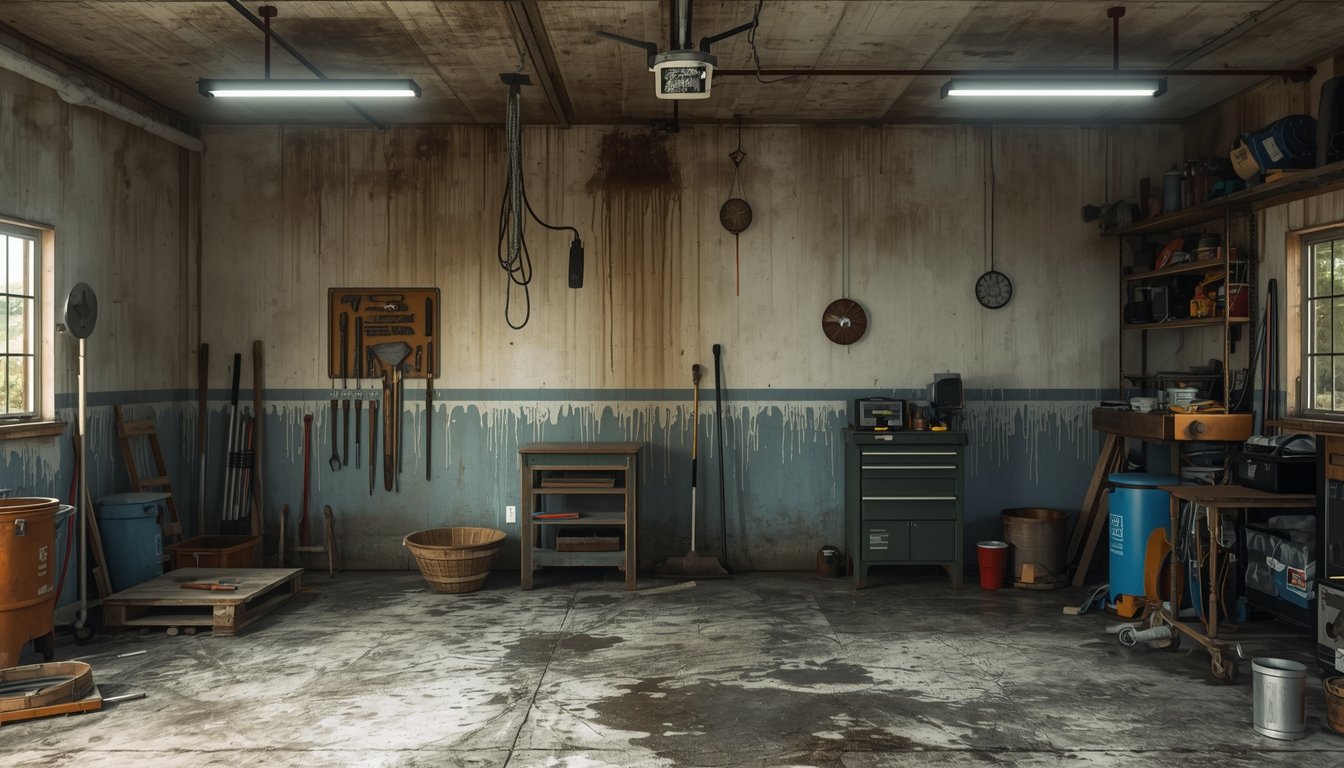
Garages get damp because they allow humid air to enter, trap moisture due to limited ventilation, and experience temperature changes that cause condensation on cooler surfaces.
In most homes, garages are not sealed or insulated like interior spaces, which makes them far more exposed to environmental conditions. This allows moisture to move in and out freely, often building up over time without being immediately noticeable.
Garages often feel noticeably more damp than the rest of the home, even when there is no obvious source of water. This comes down to how they are built and how they interact with outside air, temperature swings, and everyday use.
At first, this extra humidity may not seem like a major issue. Many people assume a slightly damp garage is normal, especially if it is used for storage or frequently opened throughout the day. However, when moisture levels remain elevated over time, it can lead to ongoing problems that affect both the structure of the space and the items stored inside it.
To fully understand how these issues develop, it helps to start with a clear explanation of what a garage dehumidifier is and do you really need one, as this provides context for how moisture behaves and how it can be controlled effectively.
Main Causes of Garage Humidity
- Warm, humid air entering through gaps around doors and walls
- Poor ventilation that traps moisture inside the space
- Concrete floors absorbing and releasing moisture over time
- Temperature differences causing condensation on cooler surfaces
- Everyday activities introducing water into the garage
In most homes, garages are not airtight spaces. Small gaps around doors, joints, and structural elements allow outside air to enter freely. When this air carries moisture, it increases the humidity level inside the garage, especially during warmer or more humid weather.
A common issue is that once moisture enters the space, it has nowhere to go. Many garages lack proper airflow, which means humid air becomes trapped. Over time, this creates a consistently damp environment rather than a temporary fluctuation.
Concrete also plays a major role. Garage floors are typically made from concrete, which naturally absorbs moisture from the ground and releases it back into the air. This process can continue indefinitely, contributing to long-term humidity even when there is no visible water present.
How Temperature Changes Create Condensation
This typically happens when warm air comes into contact with cooler surfaces inside the garage. Materials like concrete floors, metal tools, and garage doors tend to remain cooler than the surrounding air. When humid air touches these surfaces, the moisture condenses into water droplets.
In most homes, this effect is more noticeable during seasonal changes or daily temperature swings. For example, a warm day followed by a cooler evening can cause condensation to form overnight. Even if the garage appears dry during the day, moisture can still be building up during these cycles.
Many people notice condensation first on metal surfaces or windows, but it can also occur in less visible areas such as behind stored items or along walls. Over time, this repeated process contributes to a consistently humid environment.
Everyday Sources of Moisture You Might Overlook
- Parking a wet car in the garage after rain
- Storing damp tools or gardening equipment
- Using the garage as a laundry or drying area
- Bringing in items that hold moisture, such as shoes or clothing
- Minor leaks or water entering through cracks
A common issue is that moisture is often introduced into the garage through normal daily activities. For example, a wet car can release a significant amount of water into the air as it dries. This moisture does not disappear quickly in an enclosed space and instead contributes to rising humidity levels.
Many people find that garages used for multiple purposes tend to have higher moisture levels. Storing items that have been exposed to rain or using the space for drying clothes can gradually increase humidity without it being immediately noticeable.
Even small amounts of water entering through cracks or gaps can add up over time. While these sources may seem minor individually, together they create a steady increase in moisture within the space.
Why Ventilation Alone Is Not Enough
Ventilation can help reduce humidity to some extent, but it is often not a complete solution. In many garages, airflow is limited or inconsistent, which means moisture is not effectively removed.
Opening the garage door may provide temporary relief, but it also allows more humid air to enter, especially in certain climates. This can result in a cycle where humidity levels fluctuate without ever truly being controlled.
In most homes, consistent moisture management requires more than just airflow. While ventilation is part of the solution, it does not actively remove moisture from the air in the same way a dehumidifier does.
The Long-Term Impact of High Humidity
When humidity levels remain high over time, the effects become more noticeable. Tools and equipment may begin to rust, stored items can deteriorate, and surfaces may develop mold or mildew. These problems often develop slowly, which is why they are easy to overlook at first.
Many people find that once damage becomes visible, it requires more effort to fix than it would have taken to prevent. Rusted tools may need to be replaced, and mold can be difficult to remove completely if it has spread.
In most homes, managing humidity early helps avoid these long-term issues and keeps the garage in better condition overall.
Conclusion
Garages become damp and humid due to a combination of environmental exposure, structural design, and everyday use. While this is common, it is not something that needs to be accepted as unavoidable.
Understanding the causes of humidity is the first step toward controlling it. Once you recognise how moisture enters and behaves within the space, it becomes much easier to take practical steps to reduce it and maintain a dry, stable garage environment.