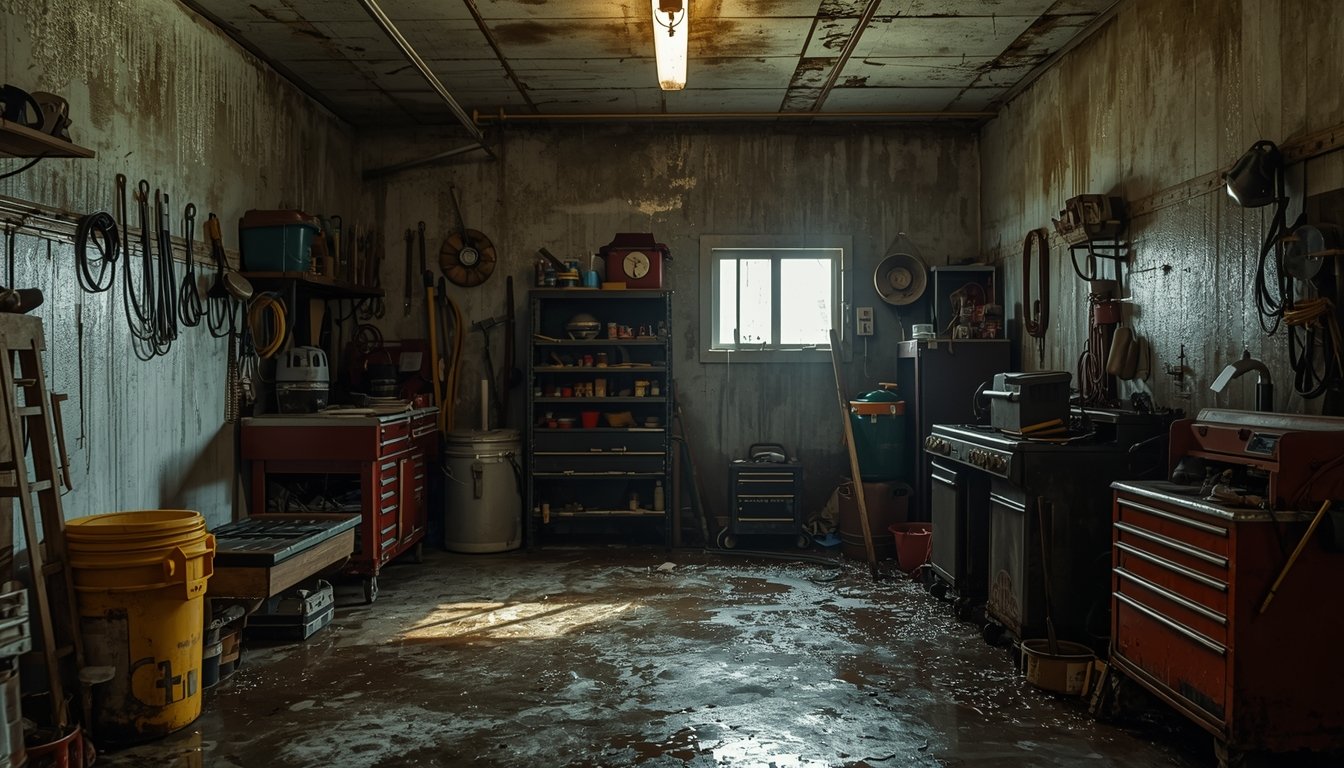
You can tell a garage has excess moisture when you notice musty smells, condensation, rust on tools, or damp storage materials, even if there is no visible water present.
In most homes, moisture problems develop gradually and are easy to overlook at first. Many people only recognise the issue once damage becomes visible, but there are usually early warning signs that appear well before that point.
Excess moisture in a garage does not always show up as obvious water or flooding. Instead, it builds up slowly in the air and on surfaces, affecting the space over time.
A common issue is that garages are not checked as regularly as other areas of the home. Because of this, humidity problems can develop quietly in the background. By the time something like rust or mold becomes noticeable, the underlying moisture levels have often been high for quite some time.
To understand why these signs appear, it helps to first look at what a garage dehumidifier is and do you really need one, as it explains how moisture behaves and why it builds up in enclosed spaces.
Early Signs of Moisture Buildup
- A musty or damp smell that lingers in the garage
- Light condensation on walls, windows, or garage doors
- Slight rust forming on tools or metal surfaces
- Cardboard boxes feeling soft or slightly damp
- A general feeling of heavy or humid air
In most homes, these early signs are subtle and easy to ignore. A musty smell is often one of the first indicators, even before any visible moisture appears. This smell usually comes from mildew starting to develop in hidden areas such as corners or behind stored items.
Many people find that condensation appears only at certain times, such as early mornings or cooler evenings. This can make it seem like a temporary issue, but it is actually a sign that humidity levels are high enough to cause moisture to form regularly.
Slight rust is another early warning sign that is often overlooked. When metal surfaces begin to corrode, it indicates that moisture has been present in the air for a consistent period of time.
More Obvious Signs of a Developing Problem
- Rust spreading across tools, shelving, or equipment
- Mold or mildew growing on walls, ceilings, or stored items
- Water stains or discoloration on surfaces
- Peeling paint or damage to materials
- Persistent damp patches on floors or walls
As moisture levels remain high, the signs become more visible and harder to ignore. Rust is one of the most common issues in garages, especially where tools or mechanical equipment are stored. Once it begins, it can spread quickly and damage items beyond repair.
Mold and mildew are also strong indicators of ongoing humidity problems. These can appear as dark spots or patches, often in corners or areas with limited airflow. In many homes, mold growth suggests that moisture has been present for an extended period rather than being a short-term issue.
Water stains and surface damage can develop as materials repeatedly absorb and release moisture. Over time, this weakens surfaces and can lead to structural concerns if left unaddressed.
How Moisture Affects Stored Items
Many people use their garage for storage, often placing items in boxes or on shelves without considering how humidity might affect them. Excess moisture can damage a wide range of materials, including cardboard, fabric, wood, and electronics.
Cardboard boxes are often the first to show signs of moisture damage. They may become soft, warped, or weakened, making them less effective for storage. Fabrics can absorb moisture and develop odors, while wood may expand, warp, or deteriorate over time.
Electronics are particularly vulnerable to humidity, even if they are not in direct contact with water. Moist air can affect internal components, leading to reduced performance or long-term damage.
In most homes, items stored closer to the floor tend to be affected first, as moisture often settles in lower areas. However, if humidity remains high, it will eventually impact everything in the space.
Why These Signs Should Not Be Ignored
It can be tempting to ignore early signs of moisture, especially if they do not seem severe. However, in most cases, these issues will not resolve on their own. Humidity levels tend to remain high or increase over time unless there is a change in how the environment is managed.
A common issue is that small problems gradually turn into larger ones. A slight musty smell can lead to mold growth, and minor rust can spread to the point where tools need to be replaced. Addressing these issues early is usually far easier and more cost-effective than dealing with them later.
Many people find that once moisture is properly controlled, the garage becomes a much more usable and reliable space. Tools stay in better condition, stored items last longer, and the overall environment feels cleaner and more comfortable.
When to Take Action
Action should be taken as soon as early warning signs appear, even if they seem minor. In most homes, addressing moisture early prevents long-term damage and reduces the need for ongoing maintenance.
Simple steps such as improving airflow, reducing sources of moisture, and using a dehumidifier can make a significant difference. The key is to create a stable environment where humidity levels remain within a safe range rather than fluctuating constantly.
Waiting too long to address moisture problems often leads to more extensive repairs and higher costs. Taking action early helps protect both the garage and everything stored inside it.
Conclusion
Recognising the signs of excess moisture in your garage is the first step toward maintaining a dry and functional space. While some level of humidity is normal, persistent dampness is a clear indication that changes are needed.
By identifying these warning signs early and understanding what they mean, you can take practical steps to control moisture and prevent long-term damage. Over time, this leads to a more stable, reliable garage that is easier to maintain and use.