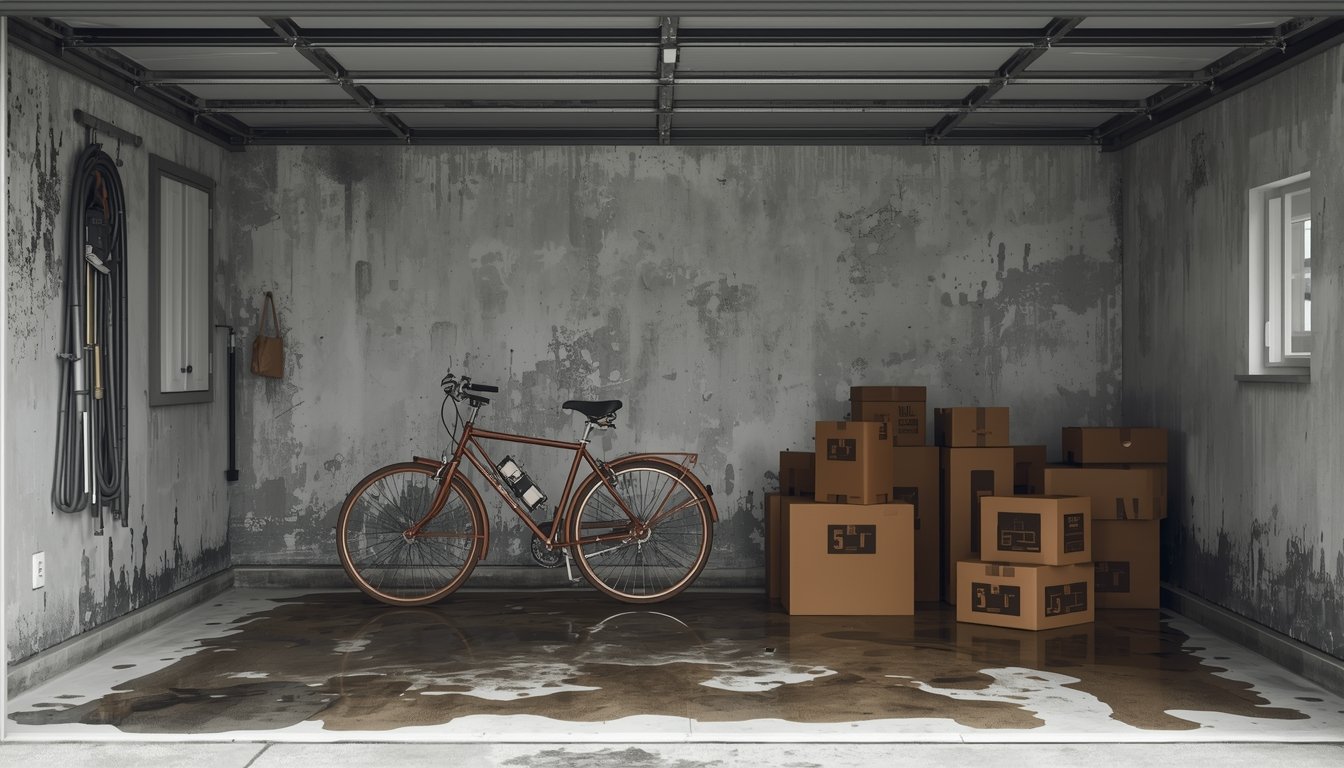
The ideal humidity level for a garage is typically between 50% and 60%. In most homes, this range is low enough to prevent problems like condensation, mold, and rust, while still maintaining a stable environment for tools, storage, and the structure itself.
A common issue is that garage humidity is rarely measured. Many people assume that if the space looks dry, everything is fine. This typically happens because humidity is invisible until it starts causing noticeable problems. By the time condensation appears or items begin to deteriorate, humidity has often been outside the ideal range for some time.
Maintaining the right humidity level is one of the most effective ways to protect your garage long-term. It helps prevent damage, improves usability, and reduces the need for ongoing maintenance. For a broader understanding of how humidity affects garage environments, it helps to start with what a garage dehumidifier is and do you really need one, which explains how moisture control works in practical terms.
Why the Ideal Range Matters
- Prevents condensation from forming on cold surfaces
- Reduces the risk of mold and mildew growth
- Protects tools and stored items from moisture damage
In most homes, garages are more exposed to temperature changes than indoor living spaces. This makes them more vulnerable to humidity fluctuations. When moisture levels rise too high, condensation can form on surfaces like concrete floors, metal tools, and garage doors.
A common issue is underestimating how quickly these problems can develop. Many people find that humidity-related damage starts subtly, with small signs such as damp smells or light surface rust. Over time, these issues can become more serious if the environment is not stabilised.
This typically happens because the garage does not have the same insulation or climate control as the rest of the house. Keeping humidity within the ideal range helps prevent these problems before they start.
What Happens When Humidity Is Too High
When humidity rises above the recommended range, moisture begins to accumulate in the air and on surfaces. In most homes, this leads to condensation forming during temperature changes, particularly overnight or during cooler weather.
A common issue is waking up to find tools, walls, or floors damp even though there is no obvious water source. Many people find that this repeated exposure to moisture leads to rust, mold, and gradual damage to stored items.
High humidity also affects air quality. The space may start to feel heavier, and musty smells can develop over time. This typically happens when moisture remains trapped in the environment without enough airflow or control.
If high humidity continues unchecked, it can turn a garage from a usable storage or workspace into an environment that requires constant maintenance and cleaning.
What Happens When Humidity Is Too Low
Materials such as wood may shrink or crack
Rubber and plastic components can become brittle
Paper and cardboard can dry out and weaken
In most homes, low humidity is less common than high humidity, but it can still occur if a dehumidifier is set too aggressively. Many people assume that removing as much moisture as possible is the goal, but this can create a different set of problems.
A common issue is over-drying the air, especially during cooler months when humidity is naturally lower. This typically happens when the dehumidifier continues running at the same level even though less moisture is present in the environment.
Over time, materials stored in the garage may begin to react to the dryness. Wood can shift, rubber can lose flexibility, and paper-based items can become more fragile. While these effects are usually slower than those caused by high humidity, they are still worth avoiding.
How to Measure and Maintain the Right Humidity
- Use a hygrometer to monitor humidity levels regularly
- Adjust your dehumidifier to maintain a stable range
- Check conditions at different times of day and during seasonal changes
In most homes, a hygrometer is the simplest way to understand what is happening in the garage. Without one, it is easy to rely on guesswork, which can lead to incorrect assumptions about moisture levels.
A common issue is checking humidity once and assuming it remains constant. Many people find that levels change throughout the day, especially with temperature shifts. Monitoring over time provides a clearer picture of how the environment behaves.
This typically happens because garages are influenced by outside conditions. Weather, usage, and airflow all play a role in how humidity fluctuates. By tracking these changes, it becomes much easier to maintain a consistent and effective range.
Why Stability Is More Important Than Perfection
In most homes, maintaining a consistent humidity level is more important than trying to achieve a perfect number. A garage that stays within a stable range is far less likely to develop problems than one that constantly shifts between damp and dry conditions.
A common issue is chasing the lowest possible humidity reading. Many people find that this leads to unnecessary adjustments and inconsistent results. Instead, aiming for a steady range between 50% and 60% provides a practical balance.
This typically happens because stable conditions reduce stress on materials and prevent the repeated expansion and contraction caused by changing moisture levels. Over time, this helps preserve both the garage structure and its contents.
Practical Tips for Maintaining the Ideal Range
Maintaining the right humidity level is usually straightforward once you understand how your garage behaves. In most homes, a dehumidifier is the most effective tool for controlling moisture, especially during humid periods.
A common issue is running the unit inconsistently. Many people turn it on only when the garage feels damp, which allows humidity to fluctuate. Consistent use, combined with proper settings, produces more reliable results.
It also helps to minimise moisture entering the space. Keeping the garage door closed during humid conditions, avoiding the storage of wet items, and improving airflow can all support better humidity control.
Conclusion
The ideal humidity level for a garage is generally between 50% and 60%. In most homes, this range provides the best balance between preventing moisture-related problems and avoiding overly dry conditions.
By monitoring humidity, using a dehumidifier effectively, and maintaining stable conditions, you can protect your garage and everything stored inside it. Many people find that once the environment is properly controlled, the space becomes easier to manage and far more reliable over time.