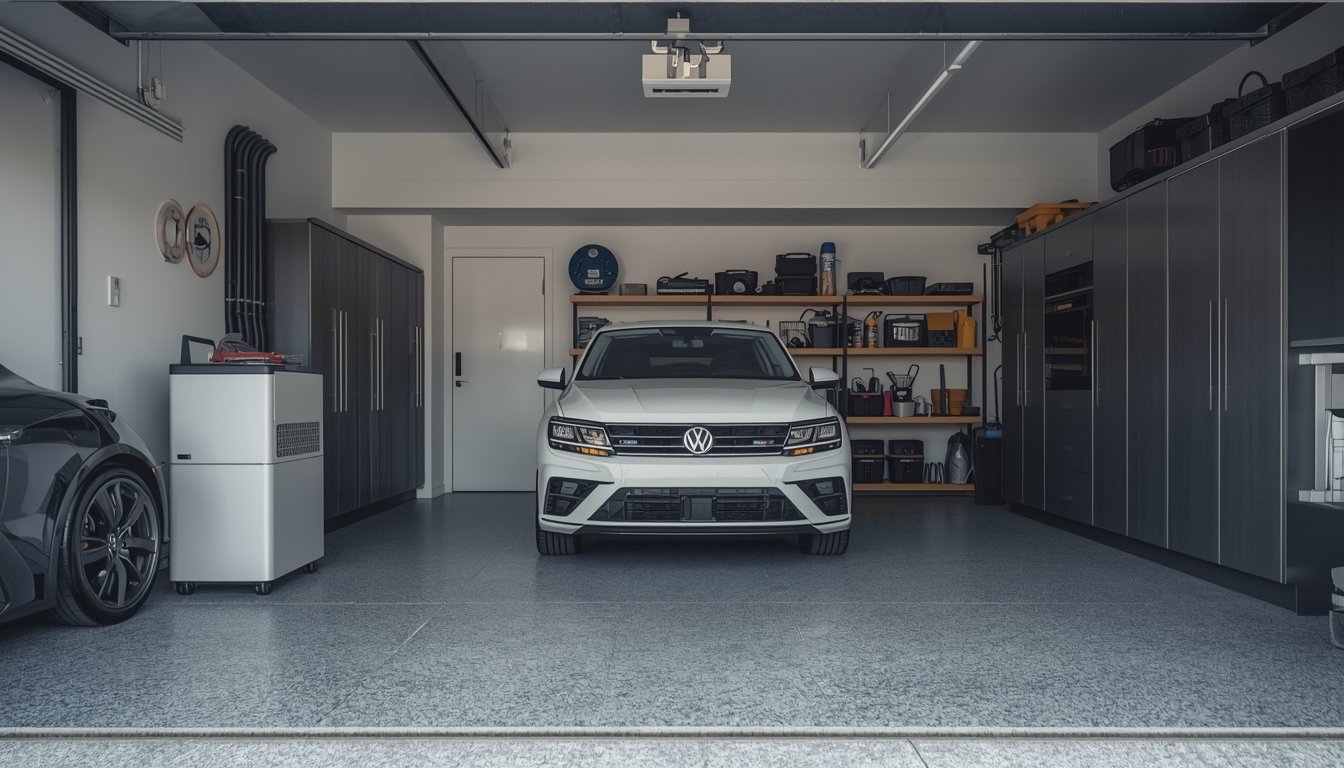
You should run a dehumidifier in a garage for as long as it takes to maintain a stable humidity level, which in many cases means running it daily or continuously depending on conditions.
In most homes, there is no fixed number of hours that applies to every situation. Garages vary widely in size, humidity, and usage, so the ideal run time depends on how much moisture is present and how quickly it builds up.
Many people assume they only need to run a dehumidifier occasionally, but garages often have ongoing sources of moisture. This means that stopping and starting the unit too frequently can allow humidity levels to rise again, reducing its overall effectiveness.
To understand how run time fits into the bigger picture, it helps to start with what a garage dehumidifier is and do you really need one, as this explains how these units maintain consistent moisture control.
What Determines How Long It Should Run
- The overall humidity level in the garage
- The size and capacity of the dehumidifier
- How often moisture enters the space
- Temperature changes throughout the day
- Ventilation and airflow conditions
In most homes, humidity level is the biggest factor. If the garage is consistently damp or prone to condensation, the dehumidifier may need to run for extended periods to bring moisture levels down.
A common issue is underestimating how much moisture is present. Even if the garage appears dry, humidity in the air can still be high enough to require regular operation.
Many people find that once the dehumidifier has reduced humidity to a stable level, it does not need to run as long or as often, provided conditions remain consistent.
Continuous Operation vs Intermittent Use
- Continuous operation maintains stable humidity levels
- Intermittent use allows humidity to rise between cycles
- Auto mode can adjust run time automatically
- Frequent stopping reduces overall effectiveness
- Consistent operation prevents moisture buildup
In most homes, continuous operation is the most effective approach, especially in garages with ongoing moisture issues. Running the dehumidifier regularly helps prevent humidity from building up again.
A common issue with intermittent use is that moisture returns quickly once the unit is turned off. This creates a cycle where the dehumidifier is always catching up rather than maintaining control.
Many people find that using the unit’s automatic settings provides a good balance. The dehumidifier runs when needed and shuts off when the desired humidity level is reached.
How Long It Takes to See Results
The time it takes to see results depends on the starting humidity level and the size of the space. In most homes, noticeable improvements can occur within a few hours, but achieving stable conditions may take longer.
A common issue is expecting immediate results in a very damp garage. If humidity levels are high, the dehumidifier may need to run continuously for several days to bring conditions under control.
Many people find that once humidity is reduced, maintaining it requires less effort. The unit will cycle on and off as needed rather than running constantly.
Signs You Are Running It Enough
- Reduced condensation on walls and surfaces
- Less damp or musty smell in the garage
- Tools and metal surfaces staying dry
- Stable humidity readings over time
- Fewer signs of moisture-related issues
In most homes, these signs indicate that the dehumidifier is doing its job effectively. When humidity is under control, the garage environment becomes noticeably more stable.
A common issue is turning the unit off too soon, before these changes have fully taken effect. This can allow moisture levels to rise again and undo the progress made.
Many people find that keeping the dehumidifier running until conditions are consistently stable leads to better long-term results.
Signs You May Need to Run It Longer
- Persistent condensation returning regularly
- Ongoing musty or damp smells
- Rust continuing to form on tools
- Humidity levels fluctuating significantly
- Moisture returning after the unit is turned off
In most homes, these signs suggest that the dehumidifier is not running long enough or frequently enough to control moisture effectively.
A common issue is using the unit only occasionally rather than as part of a consistent routine. This makes it harder to maintain stable humidity levels.
Many people find that increasing run time or allowing the unit to operate continuously resolves these issues.
Using Automatic Settings for Better Control
Modern dehumidifiers often include automatic settings that adjust operation based on humidity levels. In most homes, this is one of the easiest ways to manage run time effectively.
Instead of manually turning the unit on and off, the dehumidifier monitors the air and operates as needed. This helps maintain a consistent environment without requiring constant attention.
A common advantage of this approach is efficiency. The unit runs only when necessary, which can help reduce energy use while still maintaining proper moisture control.
Many people find that once they set the desired humidity level, the dehumidifier takes care of the rest.
Conclusion
There is no single answer to how long you should run a dehumidifier in a garage, but the goal is always to maintain stable humidity levels rather than reacting to problems after they appear.
In most homes, this means running the unit regularly or continuously, especially in environments where moisture is a consistent issue. By understanding how your garage behaves and adjusting run time accordingly, you can create a dry, stable space that is easier to maintain over time.