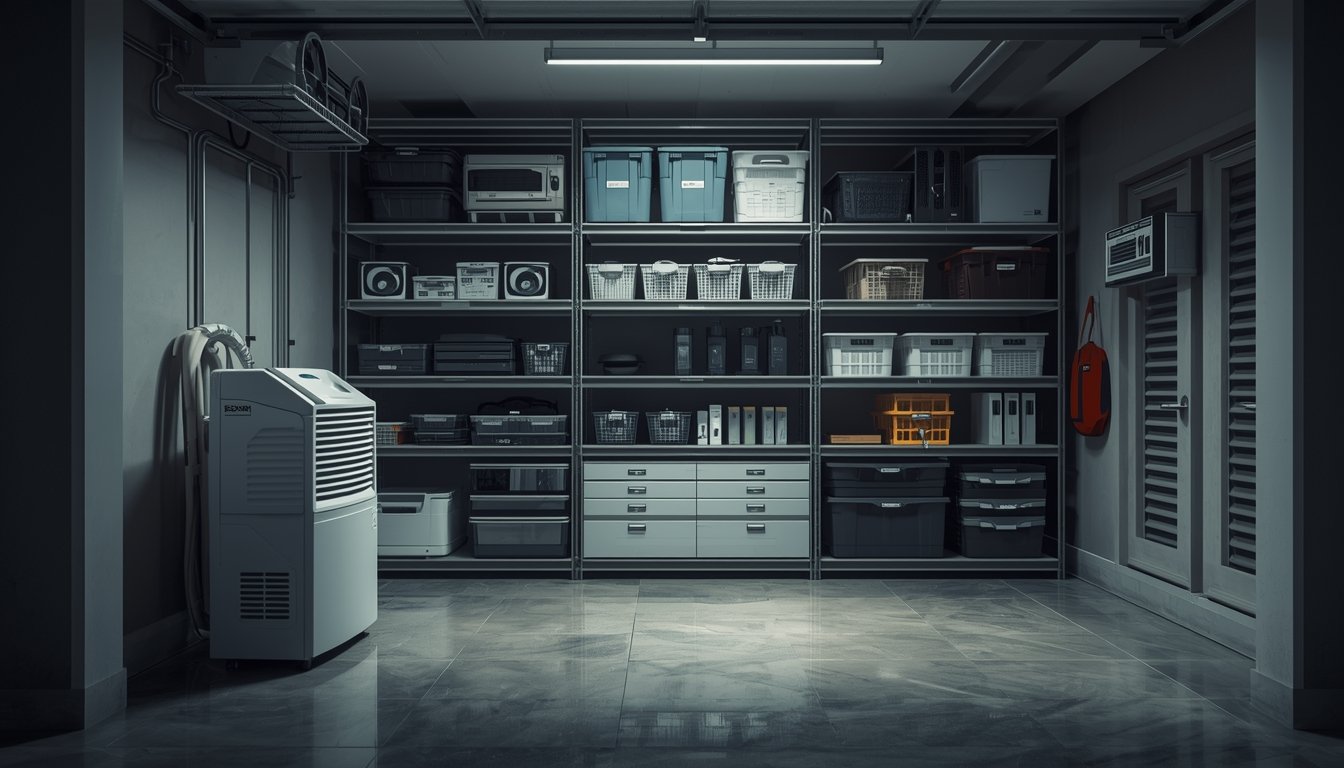
The size of dehumidifier you need for a garage depends on the space size, humidity level, and how much moisture is regularly present in the air.
In most homes, choosing the right size is one of the most important factors in getting good results. A unit that is too small will struggle to keep up with moisture levels, while one that is too large may cycle inefficiently and not run as effectively as it should.
Many people assume any dehumidifier will work in a garage, but garages are often more demanding environments than indoor rooms. They tend to have higher humidity, more airflow, and greater temperature variation, all of which affect how a unit performs.
To understand how sizing fits into the bigger picture, it helps to first look at what a garage dehumidifier is and do you really need one, as this explains how these units manage moisture and why capacity matters.
What Dehumidifier Size Actually Means
- Measured by how many litres of moisture the unit removes per day
- Larger capacity means more moisture removal in high humidity
- Smaller units are designed for lighter indoor conditions
- Performance depends on both size and environment
- Ratings are based on standard test conditions
In most homes, dehumidifiers are rated by how much water they can extract from the air in a 24-hour period. This is usually measured in litres per day. For example, a 20-litre unit can remove up to 20 litres of moisture under ideal conditions.
A common issue is that these ratings are based on controlled environments with consistent temperature and humidity. Garages often do not match these conditions, which means real-world performance may be lower than expected.
Many people find that choosing a slightly larger unit than recommended helps compensate for this difference, especially in spaces with higher humidity or poor airflow.
Matching Dehumidifier Size to Garage Size
Choosing the right size starts with understanding the size of your garage. A small single garage will require less capacity than a large double garage or workshop space.
In most homes, a small garage may only need a moderate-capacity unit, while larger garages require higher-capacity models to keep humidity under control. The key is not just the size of the space, but how much moisture is present.
A common mistake is selecting a unit based only on floor size without considering conditions. A dry garage and a damp garage of the same size will require very different dehumidifier capacities.
Many people find that garages used for storage or with limited airflow need more powerful units than expected. This is because moisture builds up more easily in enclosed or heavily used spaces.
Why Humidity Level Matters More Than Size Alone
- High humidity requires higher-capacity units
- Mild humidity may be handled by smaller units
- Seasonal changes can increase moisture levels
- Poor ventilation increases the workload on the unit
- Frequent moisture sources raise overall demand
In most homes, humidity level plays an even bigger role than garage size. A small garage with high humidity may require a larger unit than a bigger garage that stays relatively dry.
A common issue is that people underestimate how much moisture is present in the air. Even if there is no visible dampness, humidity levels can still be high enough to cause problems over time.
Many people find that garages in humid climates or areas with frequent temperature changes need stronger units to maintain stable conditions. This is especially true when condensation or dampness is already visible.
How Usage Affects the Size You Need
How you use your garage also affects the size of dehumidifier required. In most homes, garages are used for a variety of purposes, which can introduce additional moisture into the space.
Parking a wet car, storing damp equipment, or using the garage as a workspace can all increase humidity levels. The more moisture that enters the space, the harder the dehumidifier needs to work.
Many people find that garages used as workshops or storage areas require higher-capacity units than garages used only for parking. This is because there are more sources of moisture and less opportunity for it to dissipate naturally.
What Happens If You Choose the Wrong Size
Choosing the wrong size dehumidifier can lead to poor performance and ongoing moisture problems. In most homes, an undersized unit will run continuously without effectively lowering humidity levels.
A common issue with smaller units is that they cannot remove moisture as quickly as it is entering the space. This means humidity remains high, and problems such as condensation, rust, and mold continue.
On the other hand, an oversized unit can sometimes cycle on and off too quickly. While this is less common in garages, it can still affect efficiency if the unit does not run long enough to properly remove moisture from the air.
Many people find that selecting a unit with slightly more capacity than needed provides the best balance between performance and efficiency.
How to Choose the Right Size for Your Garage
- Measure the size of your garage accurately
- Assess how damp the space feels over time
- Consider how often moisture enters the garage
- Choose a unit slightly above your minimum requirement
- Look for models designed for tougher environments
In most homes, the best approach is to combine space size with an honest assessment of moisture levels. If your garage already shows signs of dampness, it is usually better to choose a higher-capacity unit.
A common mistake is trying to save money by choosing a smaller model, only to find that it does not perform well enough. Investing in the right size from the start often leads to better long-term results.
Many people find that once they choose the correct size, the difference is immediate. Humidity levels stabilise, condensation reduces, and the overall environment becomes easier to manage.
Conclusion
Choosing the right size dehumidifier for your garage is essential for effective moisture control. It is not just about the size of the space, but also the level of humidity and how the garage is used.
By understanding how capacity works and selecting a unit that matches your conditions, you can create a more stable and reliable environment. Over time, this helps protect tools, stored items, and the structure of the garage itself.