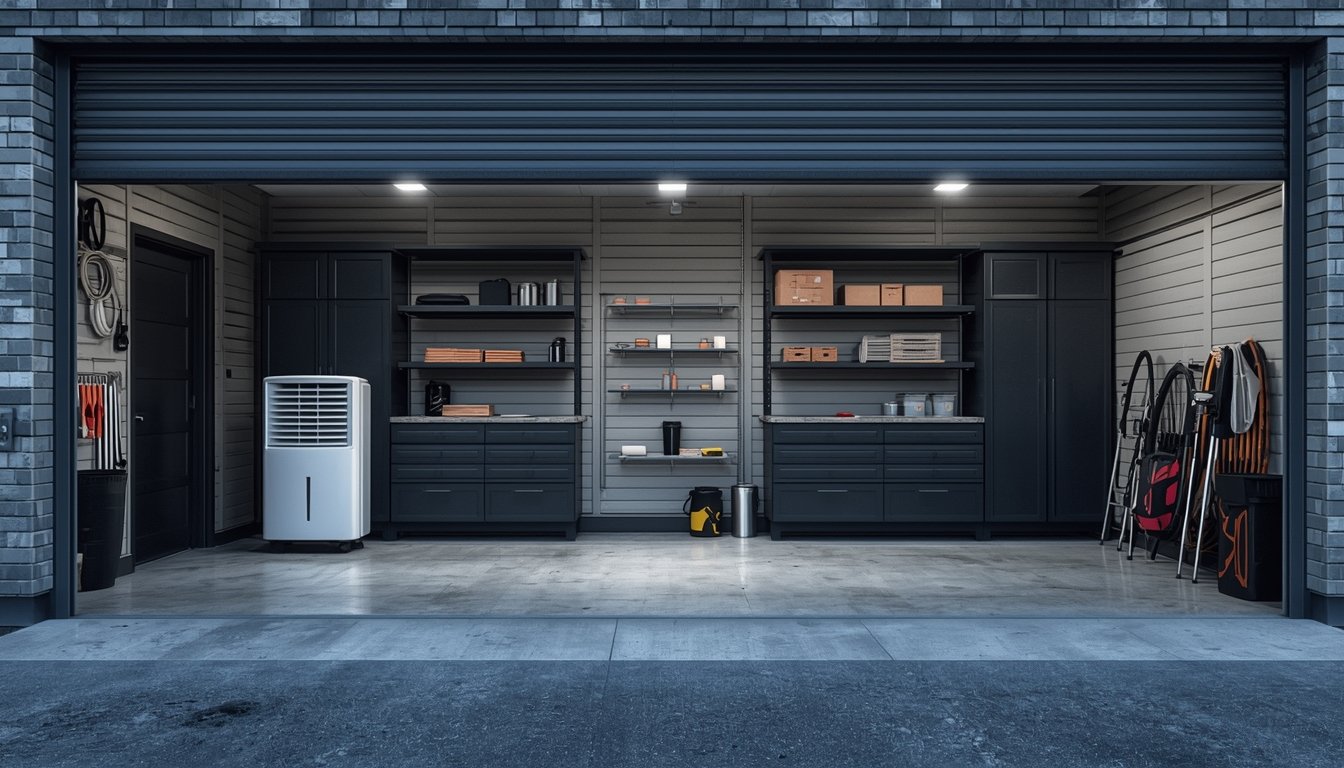
You should place a dehumidifier in a garage where airflow is unrestricted, moisture is most concentrated, and the unit can operate safely without obstruction.
In most homes, placement has a direct impact on how effectively a dehumidifier works. Even a high-capacity unit can struggle if it is positioned in a way that limits airflow or prevents it from reaching the areas where moisture is most present.
Many people assume that simply placing the unit anywhere in the garage will give the same result, but this is rarely the case. Air needs to circulate freely through the dehumidifier for it to remove moisture efficiently, and poor placement can reduce its effectiveness significantly.
To understand how placement fits into the overall system, it helps to start with what a garage dehumidifier is and do you really need one, as this explains how these units pull in humid air, remove moisture, and release drier air back into the space.
General Placement Rules That Improve Performance
- Place the unit in an open area with good airflow
- Keep it at least a short distance away from walls
- Avoid placing it behind or between large objects
- Ensure the air intake and output are not blocked
- Position it on a flat, stable surface
In most homes, the simplest way to improve performance is to give the dehumidifier space to operate. These units rely on pulling air in, processing it, and then pushing it back out. If that airflow is restricted, the unit cannot work efficiently.
A common mistake is placing the dehumidifier too close to a wall or in a tight corner. While this may seem like a convenient location, it limits how much air can pass through the unit.
Many people find that moving the unit just a small distance away from obstacles can make a noticeable difference in how quickly humidity levels drop.
Should You Place It in the Center or Near a Problem Area?
One of the most common questions is whether the dehumidifier should be placed in the center of the garage or closer to where moisture is most noticeable.
In most homes, placing the unit in a more central location allows it to circulate air evenly throughout the space. This can be effective in garages where humidity is spread evenly.
However, if there is a specific area where moisture is more concentrated—such as near a garage door, a wall with condensation, or a damp corner—it can be helpful to position the unit closer to that area.
A common issue is placing the unit directly against the damp surface. This can reduce airflow and limit how effectively the unit can draw in humid air.
Many people find that placing the dehumidifier slightly away from the problem area, while still within range, provides the best balance between targeted moisture removal and proper airflow.
How Airflow Affects Dehumidifier Efficiency
- Clear airflow allows the unit to process more air per cycle
- Blocked airflow reduces moisture removal efficiency
- Open space improves circulation throughout the garage
- Clutter can create pockets of trapped humidity
- Consistent airflow leads to more stable humidity levels
In most homes, airflow is one of the most important factors in dehumidifier performance. The unit can only remove moisture from the air that passes through it, so anything that limits airflow will reduce its effectiveness.
A common issue is placing the unit in a cluttered area surrounded by boxes, tools, or storage items. These obstacles can block air movement and prevent the dehumidifier from working properly.
Many people find that clearing space around the dehumidifier improves results almost immediately. This allows the unit to process more air and distribute dry air more evenly.
Over time, better airflow leads to more consistent humidity control and fewer problem areas within the garage.
Placement Considerations for Drainage
If you are using a drain hose system, placement becomes even more important. The unit needs to be positioned so that water can drain properly without pooling or backing up.
In most homes, this means placing the dehumidifier near a drain or ensuring the hose can run downward without obstruction. Gravity plays a key role in how well the drainage system works.
A common issue is placing the unit too far from a drainage point, which can make it difficult to route the hose effectively. This may lead to improper drainage or require additional setup.
Many people find that planning the placement of the unit with drainage in mind from the beginning makes the entire system easier to manage.
Avoiding Common Placement Mistakes
- Placing the unit directly against a wall
- Positioning it in tight corners with poor airflow
- Blocking vents with nearby objects
- Placing it on uneven or unstable surfaces
- Ignoring drainage requirements
In most homes, these mistakes are easy to make because they seem convenient at first. However, they can significantly reduce how well the dehumidifier performs.
A common issue is prioritising convenience over functionality. For example, placing the unit out of the way may keep the garage tidy, but it can also prevent the unit from working effectively.
Many people find that making small adjustments to placement leads to better results without requiring any changes to the unit itself.
Safety and Practical Considerations
- Keep the unit away from direct water exposure
- Ensure electrical connections remain dry
- Avoid high-traffic areas where it may be bumped
- Place it where maintenance is easy
- Keep it accessible for adjustments if needed
In most homes, safety is just as important as performance. Dehumidifiers are electrical appliances, so they need to be placed in a way that minimises risk.
A common issue is placing the unit in an area where it may be knocked over or exposed to water. This can damage the unit and create safety concerns.
Many people find that choosing a dedicated, stable location for the dehumidifier helps maintain consistent performance and reduces the need for repositioning.
Conclusion
Proper placement plays a major role in how effectively a garage dehumidifier works. By choosing a location with good airflow, minimal obstruction, and practical drainage access, you can significantly improve performance.
Understanding how air moves within your garage and how the dehumidifier interacts with that airflow helps you create a setup that works reliably over time. With the right placement, the unit can maintain stable humidity levels and protect both the space and everything stored inside it.