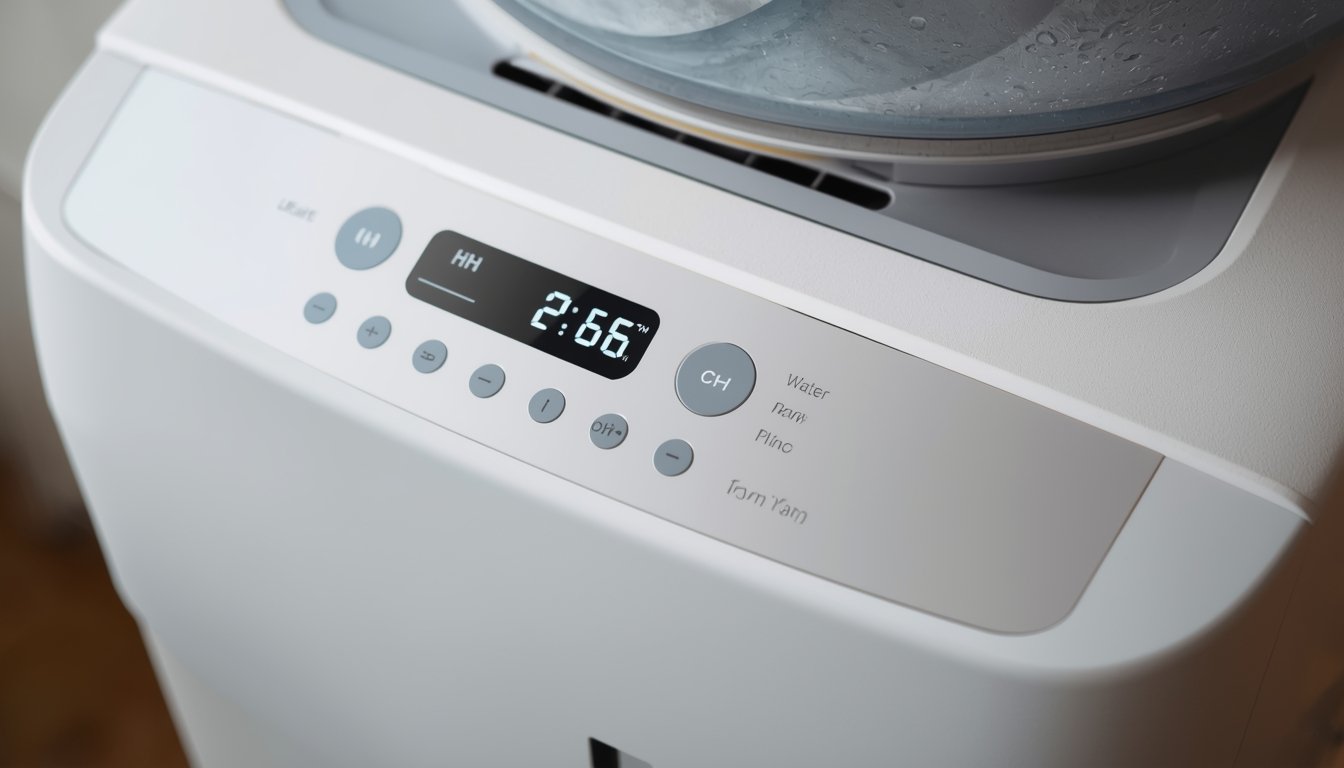
One dehumidifier can handle a garage based on its capacity, the humidity level, and how much moisture is entering the space, rather than just the physical size alone.
In most homes, people try to match a dehumidifier to square footage, but this only tells part of the story. Two garages of the same size can require completely different units depending on how damp they are and how they are used.
Many people assume that a single unit will work for any garage if it is powerful enough. While this can be true in some cases, performance depends on how well the unit can keep up with the rate at which moisture builds up.
To understand how this fits into the bigger picture, it helps to start with what a garage dehumidifier is and do you really need one, as this explains how capacity and conditions work together to control moisture.
What Determines Coverage Area
- The litre-per-day capacity of the dehumidifier
- The overall humidity level in the garage
- How sealed or ventilated the space is
In most homes, dehumidifier capacity is the main factor that determines how much space a unit can handle. Higher-capacity models are designed to remove more moisture, which allows them to manage larger or more humid areas.
A common issue is focusing only on floor size without considering how damp the garage actually is. A dry, well-ventilated garage may be handled by a smaller unit, while a damp garage of the same size may require a much larger one.
Many people find that when they choose a unit based only on size, they either end up with something that struggles or something that is larger than necessary. Understanding both size and moisture levels leads to a better match.
Why Humidity Level Changes Everything
Humidity level has a bigger impact than most people expect. In most homes, a lightly damp garage can often be managed by a moderate-capacity unit, even if the space is relatively large.
However, a garage with high humidity—especially one with visible condensation or ongoing moisture sources—can quickly overwhelm a smaller unit.
A common issue is underestimating how much moisture is entering the space. Wet cars, open doors, and outside air all contribute to humidity levels, which increases the workload on the dehumidifier.
Many people find that once humidity is brought under control, the unit does not need to work as hard. But getting to that point often requires enough capacity to handle the worst conditions, not just average ones.
Can One Unit Handle a Large Garage?
- Yes, if the unit has enough capacity
- Yes, if humidity levels are moderate
- No, if moisture load is consistently high
In most homes, a single dehumidifier can handle a large garage if it is powerful enough and the conditions are manageable. However, there are limits.
A common situation is a large double garage or workshop with high humidity. In this case, one unit may struggle to maintain stable conditions, especially if moisture is entering the space faster than it can be removed.
Many people find that in larger or more demanding spaces, either a higher-capacity unit or multiple units may be needed to achieve consistent results.
When You Might Need More Than One Unit
There are situations where using more than one dehumidifier makes sense. In most homes, this is usually due to size, layout, or persistent moisture problems.
Large garages with separate sections, poor airflow, or heavy use may not be evenly covered by a single unit. Moisture can build up in certain areas while other parts of the garage remain relatively dry.
A common issue is placing one unit in a large space and expecting it to control humidity everywhere. If airflow is limited, the unit may only affect the area around it.
Many people find that adding a second unit or repositioning the existing one improves coverage and leads to more consistent humidity levels across the entire space.
Placement and Airflow Still Matter
Even with the right capacity, placement plays a major role in how much area a dehumidifier can effectively cover. In most homes, a well-placed unit can handle more space than one that is blocked or poorly positioned.
Air needs to circulate freely through the garage for the dehumidifier to work effectively. Obstacles, walls, and clutter can all reduce how far the unit’s effect reaches.
A common issue is placing the unit in a corner or behind storage items. This limits airflow and reduces the effective coverage area.
Many people find that placing the dehumidifier in a more open location improves performance without needing to increase capacity.
How to Choose the Right Approach
- Match capacity to both size and humidity
- Consider how moisture enters the garage
- Adjust placement for better airflow
- Upgrade capacity if the unit struggles
- Add a second unit if coverage is uneven
In most homes, the best approach is to start with a unit that matches the expected conditions and then adjust based on real-world performance.
A common issue is trying to solve a capacity problem with longer run times. If the unit is not powerful enough, it will continue to struggle regardless of how long it runs.
Many people find that once they match the unit properly to their garage, humidity stabilises more quickly and the system becomes much easier to manage.
Conclusion
One dehumidifier can handle a garage, but its effectiveness depends on capacity, humidity level, and how the space is set up. Size alone is not enough to determine whether a single unit will be sufficient.
By understanding how these factors work together, you can choose the right solution for your garage and ensure consistent moisture control. Whether that means one unit or more, the goal is always to maintain a stable and reliable environment.